- First_Hand_Restoration
Construction Cleanup Liability Detroit: Why Skipping Professional Cleanup Increases Your Risk
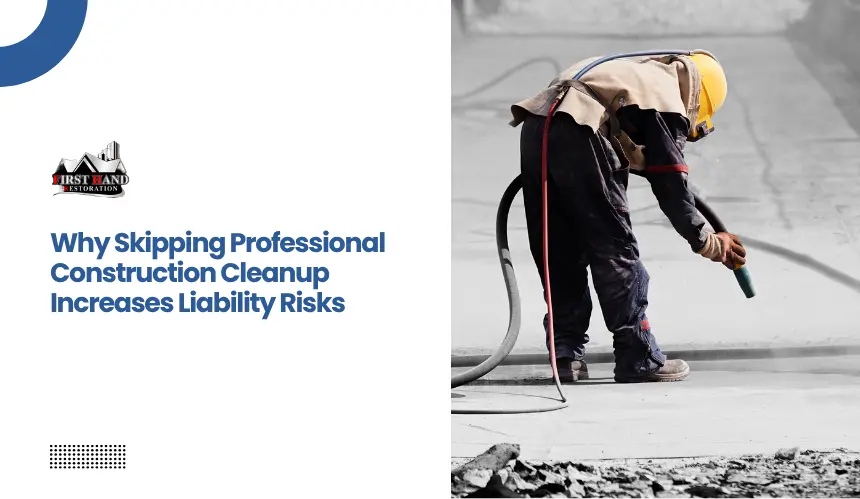
Construction cleanup liability Detroit concerns often start the moment crews pack up and leave the site, not before. A project can look finished on the surface, yet dust, debris, unfinished edges, and residual materials left behind create exactly the conditions that lead to injuries, property damage, and regulatory violations.
Liability doesn’t depend on intent, it depends on what condition the site is left in. Many owners and contractors underestimate how quickly incomplete construction cleanup turns a finished project into a legal and safety liability rather than a usable asset.
Post-Construction Sites Contain Hidden Physical Hazards
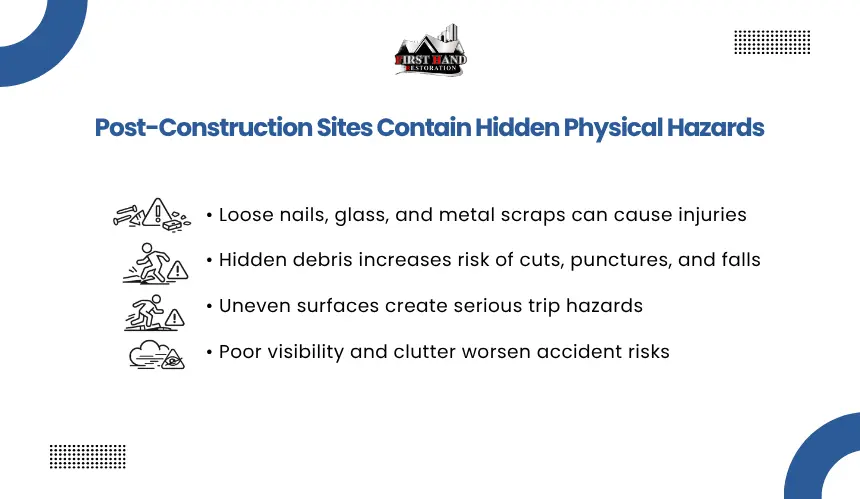
Even when a site looks visually complete, a surprising number of physical hazards can remain scattered throughout the property.
Sharp Objects and Residual Debris Create Injury Risk
Loose fasteners, exposed nails, glass fragments, and metal offcuts are commonly left behind during the final phases of a build. These materials cause lacerations, puncture wounds, and falls, especially when hidden beneath dust or packaging. Liability arises the moment a foreseeable hazard is left unaddressed in an area meant for occupancy or public access.
Uneven Surfaces and Obstructed Pathways Increase Fall Exposure
Leftover debris changes floor traction and sightlines, creating trip hazards near thresholds, stairwells, and walkways. What looks like a minor obstruction becomes dangerous once you add foot traffic, dim lighting, or an emergency exit route. Falls remain one of the most common post-construction injury claims directly tied to inadequate cleanup.
Airborne Contaminants Pose Ongoing Health and Legal Risks
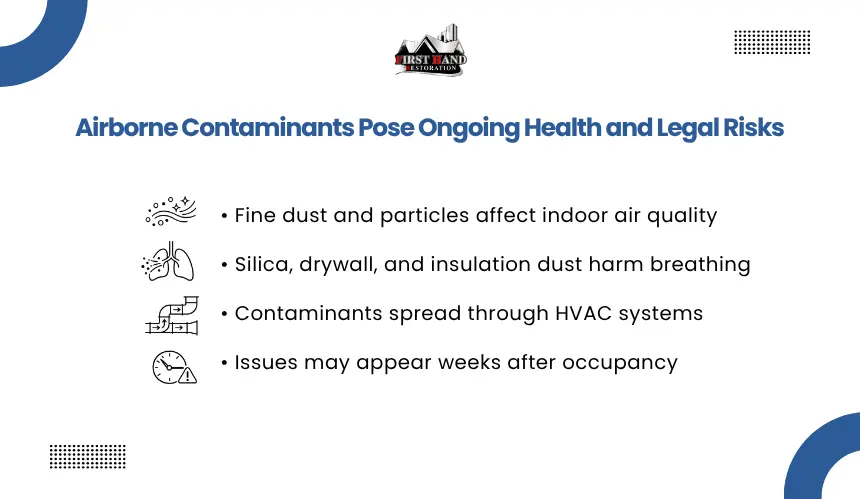
Construction work generates fine particulate matter that lingers long after the visible debris is gone. The OSHA construction industry standards page outlines just how many of these hazards, including silica dust, fall under regulated workplace safety requirements.
Dust Residue Affects Indoor Air Quality
Silica dust, drywall particles, insulation fibers, and wood particulates settle into HVAC systems, surfaces, and furnishings long after cleanup crews leave. OSHA’s respirable crystalline silica standard for construction exists specifically because this kind of fine dust exposure causes serious, sometimes irreversible, respiratory harm. Liability climbs fast when poor air quality can be traced back to incomplete site cleanup rather than an unrelated cause.
Contaminants Spread Beyond the Immediate Work Area
Airborne particles travel through ventilation systems and open pathways into spaces that were never part of the original construction zone. Without professional containment and removal, contamination extends liability well beyond the project footprint, which complicates who’s actually responsible for the remediation.
Improper Disposal Creates Environmental and Regulatory Exposure
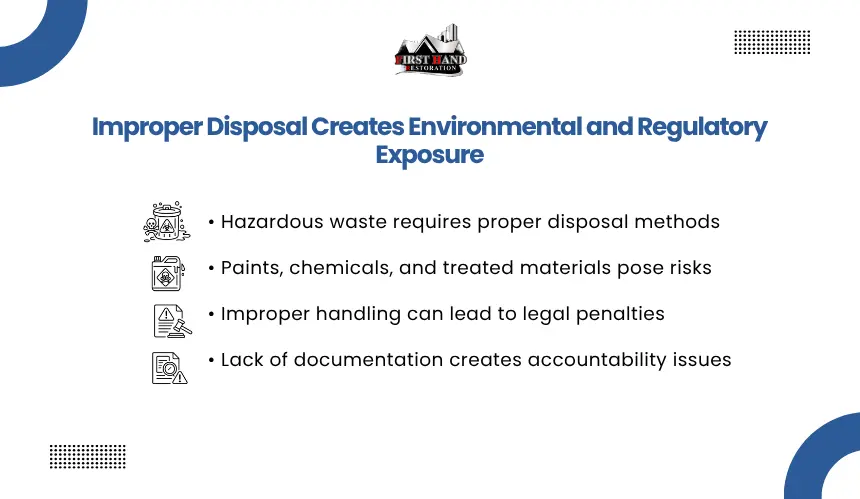
Construction waste is regulated at multiple levels, and mishandling it introduces compliance risk that goes beyond a simple cleanup issue.
Hazardous and Regulated Materials Require Specific Handling
Paint residues, adhesives, solvents, treated wood, and insulation materials often require specialized disposal methods. Leaving these materials onsite, or disposing of them improperly, can violate local and environmental regulations and expose property owners to fines, corrective orders, or remediation mandates.
Documentation Gaps Complicate Accountability
Without clear documentation of debris removal and disposal practices, it becomes difficult to establish responsibility if environmental issues surface later. Professional cleanup includes a verifiable process that demonstrates due diligence, which reduces disputes over whether reasonable care was actually exercised.
Occupancy Without Cleanup Transfers Risk to Property Owners
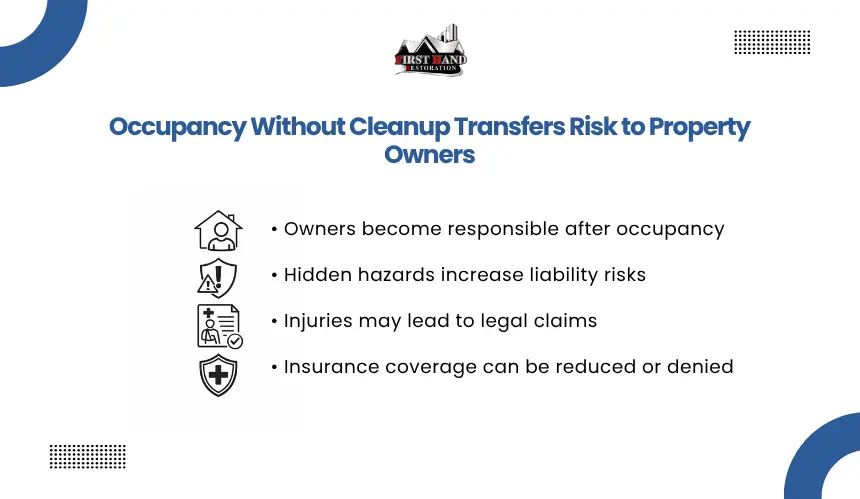
Once a property is occupied, liability typically shifts from the contractor to the owner or manager, regardless of who actually created the hazard. The DC Department of Insurance’s overview of liability insurance explains how documented safety practices directly affect how insurers evaluate a business’s risk exposure.
Foreseeable Hazards Create Legal Responsibility
If a reasonable inspection would have identified a remaining hazard, owners can be held responsible for resulting injuries, even when the construction contractor originally caused the condition. Skipping professional cleanup increases the odds that hazards stay hidden until an incident forces the issue.
Insurance Coverage May Be Affected
Claims tied to post-construction injuries or damage can be denied or reduced if an insurer determines proper site preparation was never completed. Inadequate cleanup is frequently treated as negligence, which undermines coverage and increases out-of-pocket exposure right when owners need protection the most.
Fire and Electrical Risks Persist After Construction Ends
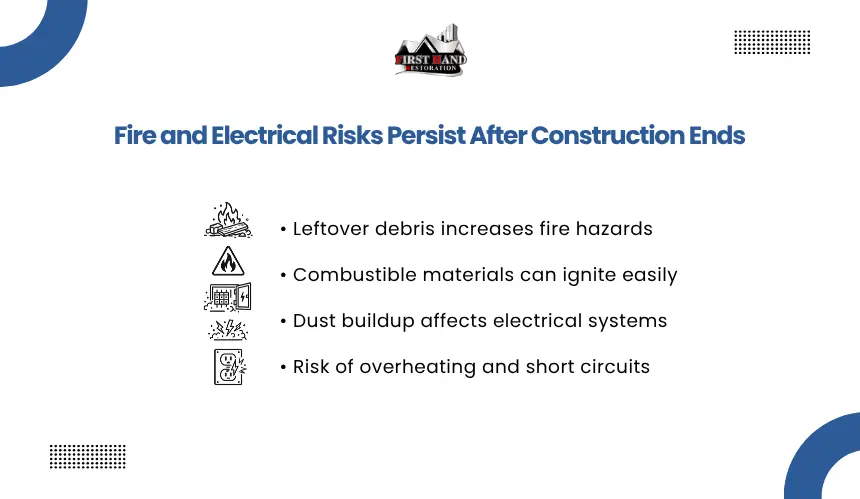
Residual materials and unfinished details introduce fire and electrical hazards that often aren’t obvious during a quick walkthrough.
Combustible Debris Increases Fire Load
Packaging materials, sawdust, insulation scraps, and wood offcuts raise fire risk when left behind in wall cavities, mechanical rooms, or storage areas. Even a small ignition source can spread quickly when combustible debris is sitting nearby.
Electrical Components May Be Compromised
Dust accumulation inside outlets, panels, and fixtures interferes with proper electrical operation and heat dissipation. Skipping cleanup allows contaminants to remain in these sensitive areas, raising the likelihood of short circuits or overheating that create both safety and liability concerns.
Incomplete Cleanup Undermines Final Inspections and Handover
Professional cleanup plays a bigger role than most people expect in the transition from construction to occupancy.
Inspectors and Auditors Identify Cleanup Deficiencies
Regulatory inspections frequently fail when debris, dust, or unfinished surfaces obscure compliance verification. Delays from failed inspections extend project timelines and increase holding costs, all while exposing stakeholders to contractual disputes
Handover Disputes Increase When Conditions Are Incomplete
Tenants, buyers, or facility users can reject a handover if cleanliness and safety expectations aren’t met. Disputes over readiness often escalate into formal claims once cleanup responsibilities become unclear.
Long-Term Property Performance Is Affected by Cleanup Decisions
Skipping professional cleanup has consequences that extend well past immediate safety concerns.
Premature Wear and System Degradation
Dust and debris accelerate wear on flooring, finishes, mechanical systems, and fixtures. Over time, this drives up maintenance costs and shortens asset lifespan, outcomes that often trace directly back to incomplete post-construction cleanup.
Repeated Remediation Creates Compounding Costs
Issues that could have been resolved with thorough initial cleanup usually require disruptive corrective work later. Every additional intervention adds new costs, operational downtime, and renewed liability exposure that add up to far more than the original cleanup would have cost.
Frequently Asked Questions
No. Construction residues include fine particulates and hazards that require specialized removal.
Yes. Latent hazards and health issues can trigger claims later.
Yes. Inadequate cleanup may weaken claims or void certain protections.
No. Responsibility often shifts to property owners after occupancy.
Yes. Safety and readiness concerns impact inspections and valuation.
Managing Liability Through Proper Post-Construction Practices
Skipping professional construction cleanup increases liability risks because it leaves foreseeable hazards unaddressed, compromises air quality, and undermines regulatory compliance. These risks often remain invisible until an incident occurs, at which point responsibility is difficult to deflect.
Treating cleanup as a critical safety and compliance phase rather than a cosmetic step reduces exposure and protects long-term property performance. Property owners seeking structured risk reduction often rely on experienced providers such as First Hand Restoration Service LLC to ensure post-construction environments are safe, compliant, and ready for occupancy.