
- First_Hand_Restoration
Water Damage Restoration vs Basic Drying: Key Differences Explained
Water incidents are often described as “something that just needs to dry out,” yet the difference between simple drying and true recovery can determine whether a property remains stable or develops long-term problems.
Basic drying focuses on removing visible moisture, while water damage restoration addresses moisture migration, contamination risk, material degradation, and hidden secondary damage. Many property owners assume fans and time are enough, but water interacts with building assemblies in complex ways that require verification, controlled drying, and targeted remediation to prevent recurring odors, structural weakening, and future repair cycles.
Basic Drying Focuses on Moisture Reduction, Not Full Recovery
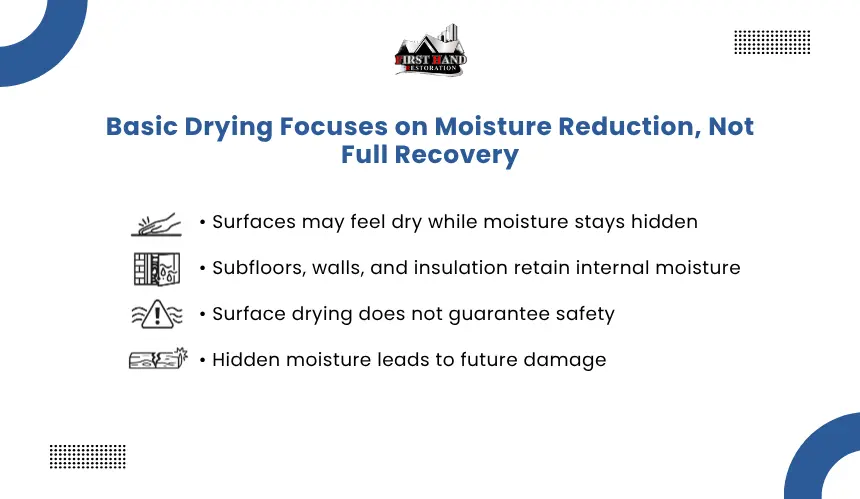
Basic drying is a limited response that aims to reduce wetness to a point where surfaces feel dry. It can be useful for very minor incidents, but it does not confirm whether moisture remains trapped where it can continue causing damage.
Surface Dryness Can Be Misleading
Walls, flooring, and trim can appear dry while moisture remains in subfloors, insulation, wall cavities, or framing. Porous materials absorb water internally, and evaporation may occur only at the surface level. When decisions are made based on appearance alone, hidden saturation often persists and becomes a future repair driver.
Drying Without Measurement Leaves Risk Unverified
Without moisture mapping and verification, there is no reliable way to confirm that drying reached safe levels. Basic drying commonly relies on time and airflow without documented moisture readings, increasing the risk that residual moisture remains in structural areas where mold growth and material breakdown can develop quietly.
Note: “Dry to the touch” is not the same as “dry to a safe moisture content,” especially for wood and drywall.
Restoration Includes Assessment, Containment, and Strategy
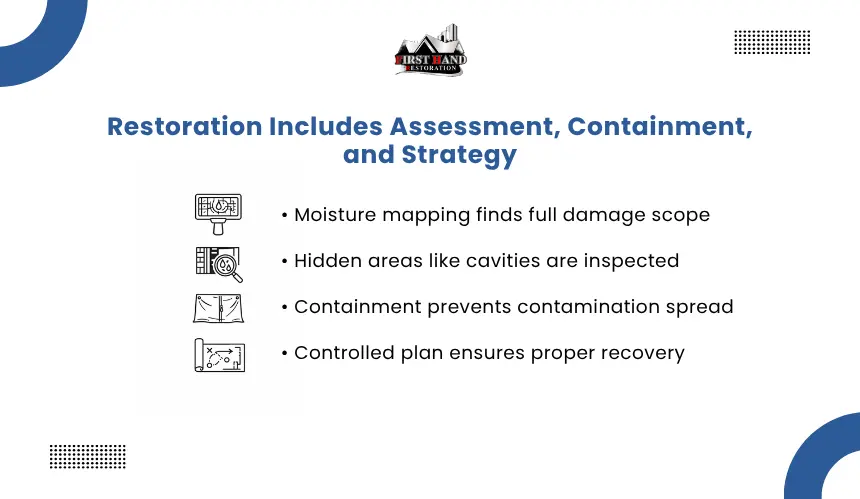
Restoration begins with identifying how far water has traveled and what materials have been affected. This changes the response from a general drying effort to a controlled plan based on how buildings actually absorb and distribute moisture.
Moisture Mapping Determines the True Scope
Water often travels through capillary action, gravity pathways, and hidden voids, meaning damage can extend beyond the visible wet area. Restoration involves identifying affected zones across floors, walls, and cavities so the drying plan targets the full extent rather than only what is easily seen.
Containment Prevents Secondary Spread
Restoration frequently includes containment strategies that limit cross-contamination and protect unaffected areas. This is especially important when wet materials contain dust, debris, or microbial activity that can become airborne during drying and demolition, affecting indoor air quality and increasing cleanup complexity.
Restoration Addresses Contamination Categories That Drying Ignores
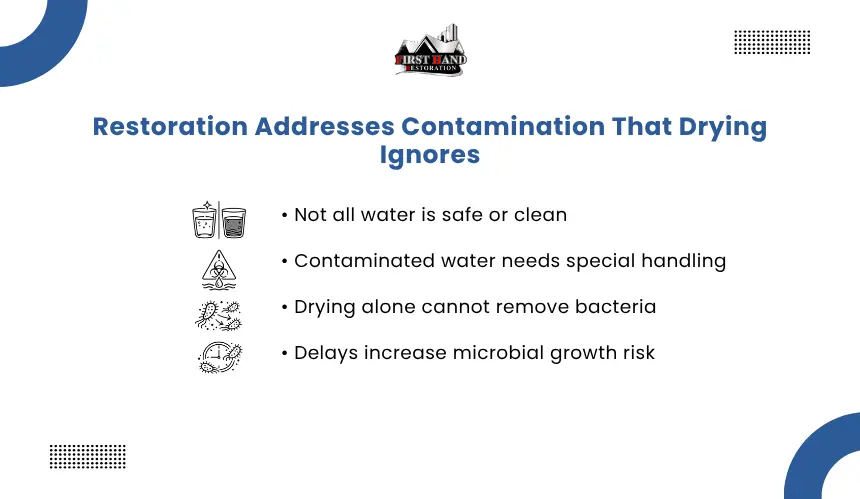
Not all water is the same, and the presence of contaminants influences whether drying alone is appropriate. Restoration accounts for the water source, exposure duration, and microbial potential rather than treating all moisture as clean.
Clean Water vs Contaminated Water Requires Different Handling
Water from supply lines differs significantly from water impacted by sewage, groundwater intrusion, or storm runoff. Contaminated water introduces pathogens and chemical contaminants that require disinfection, material removal, and safety protocols. Basic drying cannot neutralize contamination and may worsen exposure by spreading residues into porous materials.
Time Turns Minor Moisture Into Microbial Risk
Even clean water can become a microbial problem when absorbed materials remain wet for extended periods. Restoration includes drying speed control, antimicrobial decisions, and targeted removal of materials that cannot be safely dried. This approach reduces the likelihood of odor development and the need for mold-related remediation later.
Restoration Uses Verified Drying Methods and Equipment Selection
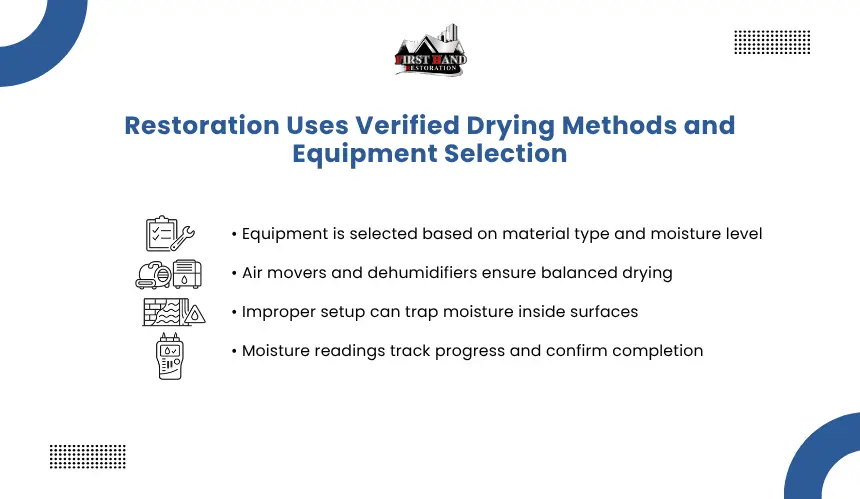
Drying is part of restoration, but restoration drying is different because it is controlled, monitored, and adapted based on measured outcomes rather than assumptions.
Equipment Is Matched to Materials and Conditions
Restoration drying selects air movers, dehumidifiers, and extraction tools based on saturation level, room volume, material type, and humidity conditions. Incorrect equipment use can create uneven drying, trap moisture behind surfaces, or increase energy use without improving outcomes. Restoration focuses on achieving balanced drying across the entire affected assembly.
Moisture Readings Confirm Progress and Completion
Restoration relies on moisture meters and humidity tracking to confirm that materials reach appropriate dryness levels. Verification reduces guesswork and helps determine whether drying is sufficient or whether removal is necessary. This measurement-based approach is one of the clearest distinctions between restoration and basic drying.
Restoration Often Requires Selective Removal and Rebuild Planning
Basic drying typically assumes the goal is to keep all materials in place. Restoration evaluates whether materials can be salvaged safely or must be removed to prevent long-term deterioration.
Porous Materials May Need Removal to Prevent Failure
Drywall, insulation, and some flooring systems lose integrity after saturation and may not regain structural performance even after drying. Restoration decisions consider material stability, microbial risk, and future performance rather than short-term appearance. Selective removal reduces the likelihood of hidden damage progressing behind finished surfaces.
Restoration Integrates With Finishing and Reconstruction Needs
When materials are removed, restoration planning often includes consideration of what will be required to return the space to pre-loss condition. This may involve drying verification before finishes are installed, ensuring rebuilt areas do not trap moisture. Skipping this integration often leads to recurring issues such as bubbling paint, warped floors, and recurring odor complaints.
Why Basic Drying Can Create False Confidence
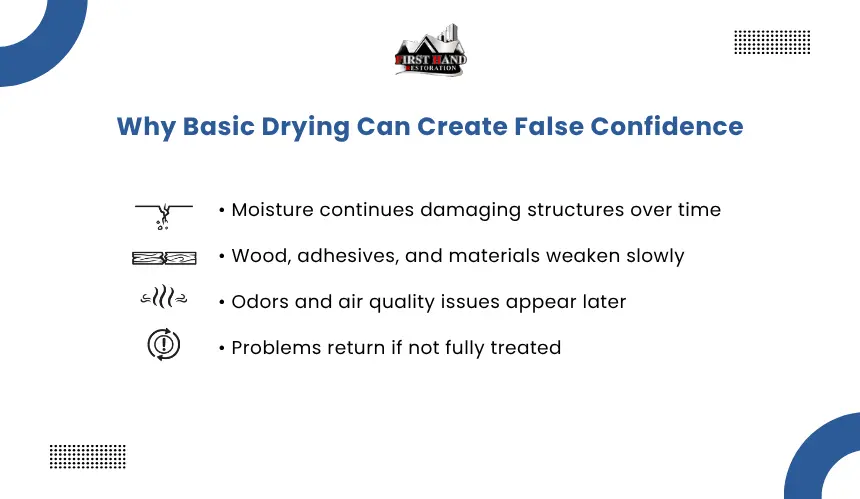
A property may feel usable quickly after drying, yet unresolved moisture can continue causing damage behind surfaces. This creates a gap between short-term comfort and long-term property health.
Residual Moisture Drives Gradual Structural Degradation
Wood swelling, adhesive breakdown, fastener corrosion, and subfloor delamination often occur slowly. By the time these issues become visible, repairs typically require demolition and replacement rather than minor correction. Restoration aims to prevent these slow-developing damage mechanisms by verifying full drying and assessing materials.
Odor and Air Quality Issues Often Appear Later
Lingering moisture and microbial activity can create odors that intensify when HVAC systems run or humidity rises. Basic drying may reduce immediate wetness but fail to remove the source of odor-causing residues. Restoration addresses source conditions so air quality problems are not simply postponed.
Practical Indicators That Restoration Is Needed
Not every moisture event requires full restoration, but many common scenarios exceed what basic drying can address safely and reliably.
Conditions That Typically Exceed Basic Drying
Incidents involving wall saturation, flooring seepage, recurring leaks, or prolonged water exposure often require professional assessment. Water near electrical systems, HVAC components, or subfloor layers also increases complexity and risk. These conditions are more likely to involve hidden moisture, contamination, or material instability.
Situations Where Simple Drying May Be Appropriate
Very small spills addressed immediately, with no absorption into structural materials, may be resolved through basic drying. The key factor is whether moisture remained superficial and short-lived. Once water enters porous materials or enclosed spaces, restoration-grade methods become more relevant.
Frequently Asked Questions
No. Fans may reduce surface moisture, but restoration includes assessment, monitoring, and contamination control.
Because moisture can remain trapped in cavities and materials while the surface dries first.
Yes. If materials stay wet long enough, microbial growth can develop even from clean water sources.
Restoration drying is measured, controlled, and adjusted based on moisture readings and environmental conditions.
Because residues and trapped moisture may remain, allowing microbial activity and off-gassing to continue.
When materials cannot be dried safely, have absorbed contaminants, or have lost structural integrity after saturation.
Choosing Recovery Over Temporary Dryness
The key difference between basic drying and true water recovery is verification and risk control. Basic drying can reduce wetness, but it often leaves unanswered questions about hidden moisture, contamination, and material stability that drive later repair costs.
Restoration evaluates the full scope, controls drying conditions, verifies moisture levels, and addresses materials that cannot be safely salvaged. Property owners seeking dependable outcomes often consult specialists such as First Hand Restoration Service LLC to ensure recovery is grounded in measurable results rather than surface-level assumptions.