Fire damage restoration Detroit property owners search for is usually triggered by something visible — a charred wall, blackened furniture, a scorched ceiling. But the truth is, the most costly damage after a fire often isn’t visible at all. Heat, smoke, soot, and the water used to put the fire out travel through a structure in ways most owners never expect — and by the time the hidden effects surface, the damage has usually gotten worse.
This is exactly why professional fire damage restoration Detroit services exist, and why they matter even when the visible burn area looks small. According to the National Fire Protection Association, U.S. fire departments respond to hundreds of thousands of home structure fires every year, and smoke and water are almost always part of the damage picture, not just the flames themselves. Detroit homes and businesses in particular often include older framing, finished basements, and legacy building materials that make hidden fire damage even more likely — which is why a full inspection, not just a quick cleanup, is the only way to protect a property long-term. First Hand Restoration LLC has been handling exactly these situations for Detroit-area properties since 2009.
Heat Travels Further Than the Flames Do
Fire doesn’t need to touch something to damage it. Intense heat radiates through walls, ceilings, and framing, weakening materials that never show a single scorch mark. This is one of the main reasons fire damage restoration Detroit contractors insist on a full structural walkthrough before calling a property safe to reoccupy.
Hidden Structural Weakening
Wood framing can dry out, crack, or lose its load-bearing strength after high heat exposure. Metal fasteners and connectors can warp or lose tensile strength, creating hidden vulnerabilities in floors, roofs, and walls — all concealed behind drywall and insulation where they’re impossible to spot without a proper inspection.
Micro-Damage From Thermal Expansion
The rapid heating and cooling cycle during a fire causes materials to expand and contract unevenly. This creates microcracks in drywall, plaster, concrete, and masonry at joints and seams. These cracks may not be visible right away, but they can widen over time with normal building movement or added moisture, leading to costly repairs down the road.
Heat Exposure Alters Materials Without Visible Charring
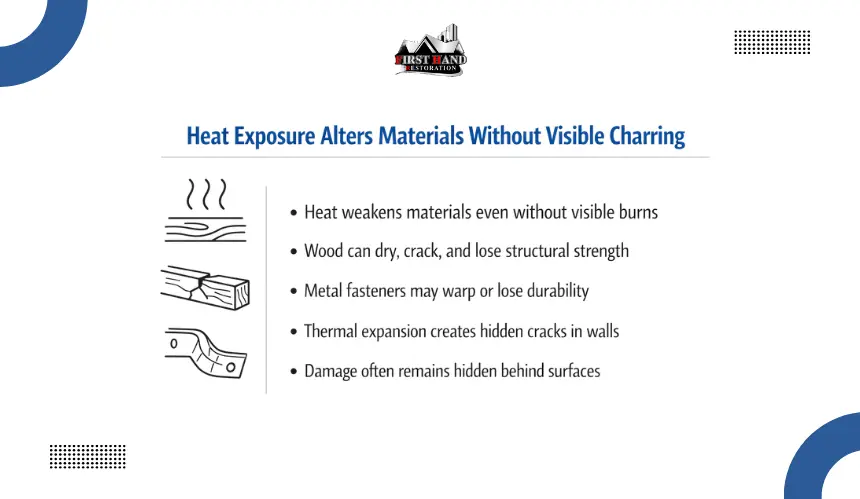
Heat from a fire can travel far beyond the room of origin, affecting framing, fasteners, and building assemblies that never appear burned. Many materials lose strength and stability when exposed to high temperatures, even if they remain visually intact.
Smoke and Soot Spread Far Beyond the Burn Zone
Smoke follows airflow, pressure differences, and ventilation paths — meaning it can reach rooms that were never anywhere near the fire. This is one of the biggest reasons DIY cleanup fails and professional fire damage restoration is necessary even after a small, contained fire.
Soot Embeds Itself in Porous Materials
Microscopic soot particles settle into insulation, fabric, unfinished wood, drywall paper, and masonry. Once embedded, soot is extremely difficult to remove with surface cleaning and continues releasing odor over time. The longer it sits, the more it bonds to materials — making staining and odor problems progressively harder to reverse.
Airflow Carries Contamination Into Hidden Areas
Attics, crawl spaces, ductwork, and wall cavities are common places where smoke settles unnoticed. Even closed doors don’t fully block smoke migration. These hidden deposits can re-release odor and particulates for months, especially every time the HVAC system cycles on.
A common pattern: A property smells “fine” right after a fire, then develops a strong smoke odor weeks later as trapped soot warms up and off-gasses during normal heating cycles.
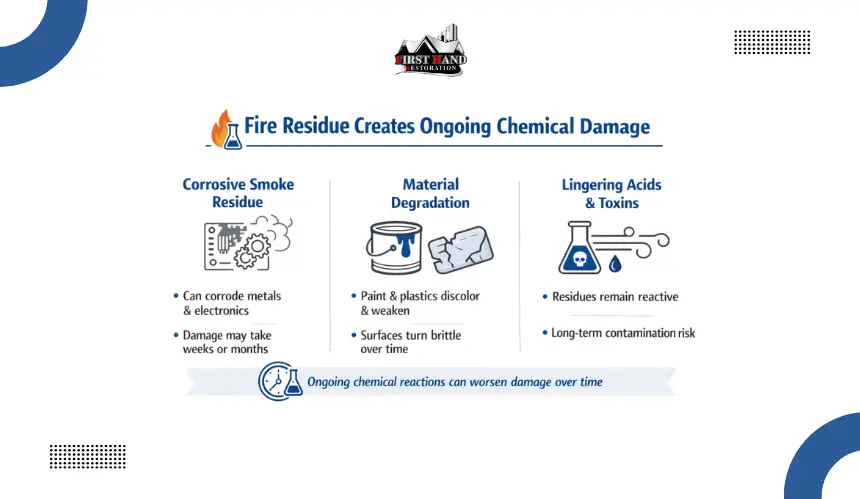
Smoke Residue Causes Ongoing Chemical Damage
Soot isn’t just dirty — it’s chemically active. Smoke residue often contains acidic compounds that keep reacting with surfaces long after the fire is out.
Corrosion of Metal, Electronics, and Appliances
Acidic soot residue can corrode metal surfaces, circuit boards, and appliance components even when there’s no visible burn damage. This corrosion builds gradually, meaning electronics and equipment that seem to work fine right after a fire can fail weeks or months later.
Discoloration and Material Breakdown
Paint, plastic, and synthetic materials can yellow, become brittle, or develop a sticky surface film after smoke exposure — and this damage tends to worsen with time if it isn’t addressed.
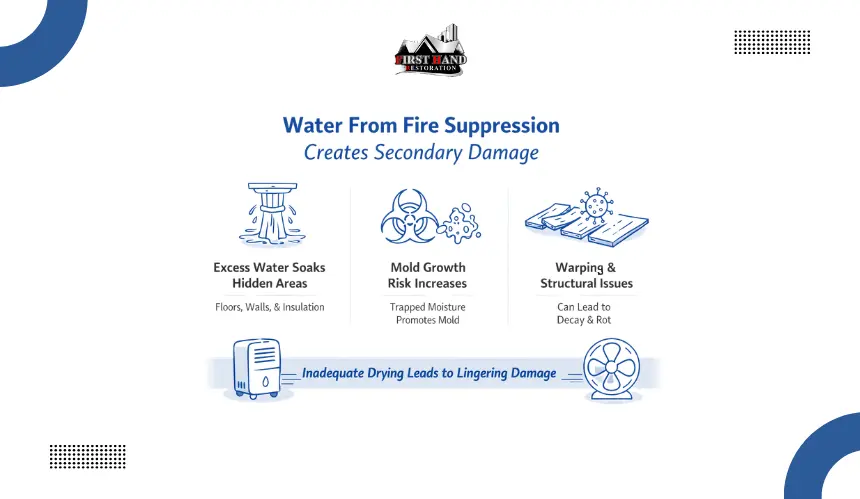
Water From Fire Suppression Creates a Second Wave of Damage
Even a small fire usually involves significant water from sprinklers, hoses, or manual extinguishing efforts — introducing a whole second category of damage that can spread further than the fire itself. This is why most fire damage restoration Detroit projects also involve water extraction and structural drying, not just smoke cleanup.
Moisture Hidden in Floors and Walls
Water travels under flooring, into subfloors, and inside wall cavities where it’s nearly impossible to detect without moisture-testing equipment. If drying is incomplete, trapped moisture leads to swelling, warping, and microbial growth — problems that often don’t show up until materials start visibly deforming or odors appear days later.
Delayed Mold Risk
Combine trapped moisture with soot contamination and you have ideal conditions for mold growth. It’s not guaranteed, but the risk climbs fast when moisture lingers in insulation, drywall, or wood. The EPA’s guidance on mold and moisture control recommends drying water-damaged materials within 24 to 48 hours to prevent mold from taking hold — a window that’s easy to miss without a professional drying plan. Fast, thorough drying is one of the biggest factors in preventing extensive mold remediation later.
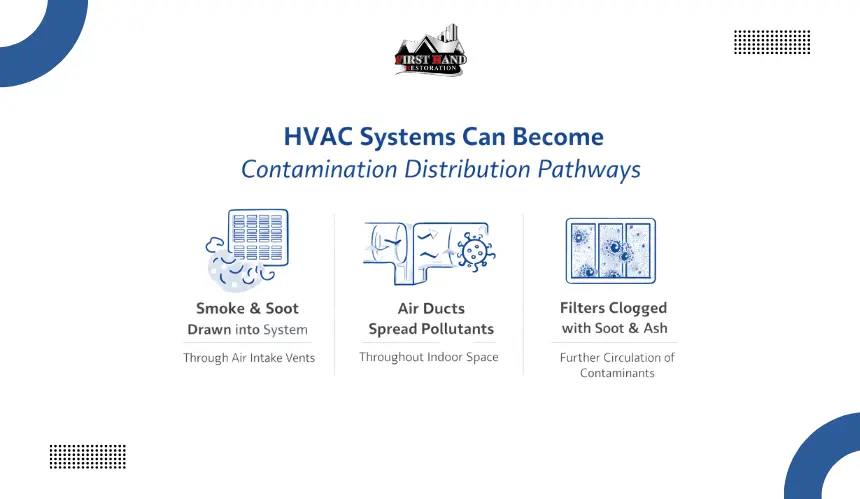
HVAC Systems Can Spread Contamination Throughout the Building
Heating and cooling systems pull smoke particles directly into ductwork, filters, and internal components — turning your HVAC system into a distribution network for contamination.
Soot Buildup in Ductwork Recirculates Particles
Every time the system runs, soot deposits inside ducts can release particles back into the air. Standard filter changes rarely solve this, since residue clings to internal duct surfaces. Real remediation requires a targeted cleaning and inspection of the whole system.
Odor Trapped in Coils and Insulation
HVAC coils, insulation liners, and air handlers absorb smoke odor and fine particulate residue. That odor tends to resurface during normal operation, particularly when warm air passes through contaminated components — which is why addressing the HVAC pathway is essential for real odor elimination.
Electrical Systems Can Be Compromised Without Any Visible Burn Marks
Electrical risk after a fire isn’t limited to melted wiring or charred outlets — heat, soot, and water can all compromise electrical safety in less obvious ways.
- Heat and soot damage: Wire insulation can crack or become brittle from heat exposure, raising the risk of shorts and arcing later. Soot can also be conductive under certain conditions, creating unintended current pathways even when wiring looks untouched.
- Water intrusion: Suppression water can seep into outlets, junction boxes, and panels, introducing corrosion that causes delayed electrical failure — even if everything appears to function normally right after the fire.
Indoor Air Quality Risks Are Frequently Underestimated
A space can look completely clean and still have fine particulate contamination suspended in the air or embedded in materials. The EPA notes that fine smoke particles are small enough to penetrate deep into the respiratory system, which is part of why indoor air quality after a fire deserves the same attention as visible damage.
Fine Particles Survive Surface Cleaning
Soot particles are small enough to settle deep into carpets and upholstered furniture. Vacuuming and wiping remove what’s visible but leave fine particulates behind — particles that become airborne again during movement, cleaning, or HVAC operation, extending exposure well past the initial cleanup.
Lingering Odor Means Lingering Contamination
If a property still smells like smoke, that’s a sign residue remains embedded in materials — not just floating in the air. True remediation removes or neutralizes the source rather than masking the smell with fragrance or surface-level treatments.
Warning Signs That Damage Extends Beyond the Burn Area
Because so much of this damage stays hidden, knowing what to look for helps property owners recognize when deeper assessment is needed:
- Soot haze appearing in rooms nowhere near the fire
- Persistent odor in closed-off spaces
- Discoloration on ceilings or near HVAC vents
- Warping floors or damp baseboards
- Staining around fixtures, suggesting water migration
Any of these signs point to the need for a structured, professional assessment — not just a localized cleanup.
Why a “Small Fire” Can Still Require Major Restoration Work
A fire can be small in terms of flame size but produce a huge volume of smoke, especially with synthetic materials common in modern homes and offices. Smoke can travel through a structure in minutes, and suppression water can spread beneath surfaces just as fast. That’s why the size of the visible burn area is never a reliable measure of the total damage, and why fire damage restoration Detroit specialists start with a full property assessment rather than just cleaning what’s obviously burned.
Frequently Asked Questions
Why does a property still smell like smoke after it’s been cleaned? Because smoke residue embeds itself in porous materials and continues releasing odor over time, especially when those materials warm up.
Can soot damage electronics even if they were never burned? Yes. Smoke residue corrodes internal components and can cause delayed equipment failure weeks or months later.
Does water damage matter after a small fire? Yes. Suppression water can migrate into hidden spaces and create structural damage and mold risk, regardless of how small the fire was.
Are HVAC systems always affected by smoke? Not always, but in many cases the system pulls in particulates that later redistribute contamination throughout the building.
Can hidden heat damage make a structure unsafe? Yes. Heat can weaken framing and connectors without any visible charring.
Is visible soot the only concern after a fire? No. Fine particulates and acidic residues can keep causing damage long after visible soot is cleaned away.
Fire Damage Is a Whole-Building Event
Fire damage reaches far beyond what’s visibly burned, because heat, smoke, soot chemistry, and suppression water all interact with building materials throughout the entire structure — not just the room where the fire started. Hidden structural weakening, corrosive residue, HVAC contamination, and moisture migration can keep causing harm long after the fire is out.
That’s why Detroit-area property owners work with experienced, local fire damage restoration Detroit teams like First Hand Restoration LLC — to identify these secondary damage mechanisms early, before they turn into major, costly repairs. With more than 20 years of hands-on restoration experience and 24/7 emergency response, our team has handled fire damage, water intrusion, mold contamination, and cleanup projects across Detroit and surrounding communities including Dearborn, Livonia, Plymouth, Westland, Taylor, Canton, Northville, Redford, Garden City, Wayne, and Dearborn Heights.
Ready to assess the full extent of fire damage on your property? Call First Hand Restoration LLC anytime at (313) 399-6881 or request a free estimate — our team responds 24/7 to limit smoke, soot, and water damage before it spreads.